Course
Integrative DermatologyPremiumCME
Internal Drivers of Skin Disease
Explore internal drivers of skin disease, including inflammation, gut health, hormones, and lifestyle factors affecting skin health.

Explore internal drivers of skin disease, including inflammation, gut health, hormones, and lifestyle factors affecting skin health.
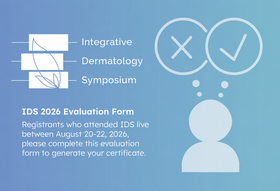
Thank you for attending IDS 2026! Please complete the evaluation form to generate your certificate. The annual Integrative Dermatology Symposium is designed to appeal to practitioners across disciplines. It will address emerging trends, and practical approaches to dermatology as practitioners assess and manage skin conditions and care. It is estimated that nearly one-third of the population is afflicted with a skin disorder. There is a great need for best practice sharing and cross-collaboration to support practitioners in the field and improve patient care outcomes.
Build a strong foundation in integrative dermatology with evidence-based approaches to whole-patient skin health and care.
Explore therapeutic innovations and global perspectives shaping advances in dermatology treatment, research, and patient care.
2026 Integrative Dermatology Symposium Lectures
2025 Integrative Dermatology Symposium Lectures
Thank you for attending IDS 2025! Please complete the evaluation form to generate your certificate. The annual Integrative Dermatology Symposium is designed to appeal to practitioners across disciplines. It will address emerging trends, and practical approaches to dermatology as practitioners assess and manage skin conditions and care. It is estimated that nearly one-third of the population is afflicted with a skin disorder. There is a great need for best practice sharing and cross-collaboration to support practitioners in the field and improve patient care outcomes.

This set of six lectures explores the intersection of emerging therapies, time-honored systems of medicine, and practical tools that dermatology professionals can integrate into modern care. From light therapies and new topical agents to herbal medicine, stress resilience, and Traditional Chinese Medicine, this series equips clinicians with evidence-based strategies to support both skin health and overall well-being.
This set of five lectures explores the intersection of sleep, stress, systemic health, and individualized treatment in dermatology. Learners will gain clinically grounded insights—from using nail findings as diagnostic tools for internal disease, to applying naturopathic principles, addressing vulvovaginal conditions through integrative care, understanding the impact of sleep on skin health, and building a holistic dermatology practice. Each session offers practical, evidence-informed strategies that blend conventional and integrative approaches to enhance diagnostic accuracy, promote patient-centered care, and support clinician well-being.

This set of three lectures explores the intersection of culturally responsive care, bias awareness, and practitioner well-being in dermatology. Learners will develop essential skills to deliver inclusive, patient-centered care by examining the principles of cultural humility, recognizing and addressing implicit bias in dermatologic diagnosis and treatment, and implementing strategies to manage burnout and foster resilience. Together, these lectures aim to promote health equity, improve patient outcomes, and support clinician well-being in the evolving landscape of dermatologic care.

Delve into the art and science of compounding in dermatology, highlighting its vital role in personalized patient care. Learn how to combine evidence-based integrative approaches with traditional compounding practices to address diverse dermatologic conditions and optimize patient outcomes. Following the lecture, we'll share information on our Integrative Dermatology Certificate Program (IDCP) and tips for advancing your integrative dermatology practice. If you have been thinking about next steps in your educational journey, join us for a fun evening of expert discussion and Q&A!

This activity serves as an introduction to the clinical presentation and management of mast cell activation syndrome (MCAS) and multiple chemical sensitivity (MCS). The pathophysiology of these two diagnoses is rooted in the same spectrum of abnormal immune response, primarily mediated by mast cells. Using this framework, we will discuss the basic treatment principles clinicians can implement to stabilize mast cell response. Further, we will explore a deeper approach to the workup of these patients aimed at the identification of underlying causes of immune dysfunction which lead to MCAS and MCS.